For years it was considered the height of indecency for a woman to display more than her ankles when at the beach. The Victorians were particularly fussy that way. Gradually, fashions and morals changed. Full swimsuits became the norm, then bikinis.
Over the last few decades the dangers of skin cancer, from exposure to the sun, have become more obvious. Doctors advise us to cover up while on the beach. Few of us take much heed, but nevertheless it’s good advice.
Today, in parts of Southern France, it’s suddenly become illegal to cover up while on the beach. This….
….is fine…
…but this isn’t.
This woman was fined by French police and told to take off her shirt.
A debate is raging throughout France on whether ‘burkinis’, the Muslim version of a swimsuit covering so much of the body its modesty would even have raised the eyebrows of prudish Victorians, was acceptable on French beaches, or if it was a religious ’emblem’ banned under French law.
As the BBC reports today:
In 2010, France became the first European country to ban the full-face veil in public
A 2004 law forbids the wearing of religious emblems in schools and colleges
The 1905 constitution aims to separate Church and state. It enshrines secularism in education but also guarantees the freedom of religion and freedom to exercise it. The original text made no reference to clothing.[1]
The ban on burkinis, or articles of clothing of a similar nature, was enacted by local mayors after the attack in Nice on Bastille Day that left eighty-five people dead.
French court rulings have overturned the bans, but the mayors say they’ll continue to enforce them in defiance of the higher legal authority.
It’s a difficult debate, given the sanctity of French secularism as enshrined in the Constitution. French children may not wear crosses or other Christian symbols in school, but the Constitution also protects the right of religious freedom.
It would seem the French mayors who are enforcing this ban have ignited a fiery debate that could threaten the very heart of the French Constitution itself.
The Rio Olympics are now over. The competitors have arrived back in their own countries and TV companies worldwide have returned to screening their mediocre programming of old movies, half-baked sitcoms, and third-rate ‘reality TV’ shows.
The Olympics were a success. At least, they were portrayed that way, and for most viewers there wasn’t too much external controversy to detract from the events themselves.
One man’s name did make the headlines and it wasn’t for winning a medal. Ryan Lochte, a U.S. swimmer, disgraced himself and his country by a drunken altercation in the early hours of the morning with security guards at a local petrol station. Not content with trashing the premises’ restroom, he then lied to police and made a false statement concocting a story of being robbed at gun point.
The next day, realizing there may be repercussions, he abandoned the three colleagues who had accompanied him on the escapade and caught a flight back to the United States. Unfortunately for Lochte the media had picked up the story and it made banner headlines around the world. Now we learn the Brazilian police are charging him with making a false statement and he could be extradited and face time in a Brazilian prison.
Of course, that’s unlikely to happen:
The US and Brazil have an extradition treaty which Brazil has flouted in the past. Authorities in the US could take the same stance if Mr Lochte is found guilty. ~ BBC [1]
The U.S. government is quick to protect those of its citizens who behave badly in other countries. It’s probable they’ll do likewise with Lochte. After all, wasn’t this just a case of four young men out for a night on the town who became embroiled with over-officious foreigners just because they were having fun?
No, it wasn’t. It was four men in a foreign country who showed disrespect and arrogance towards their hosts. At least one of them caused damage to property, threatened those who tried to stop him, and then made up a cock-and-bull story for the police when they became involved.
Ryan Lochte showed himself up as the epitome of the ‘Ugly American’. It’s a well known and oft-used phrase to describe certain elements in American society, particularly when they’re abroad on vacation or business. It stems from the spoiled brat image, the kid who had too much, who was brought up to believe he was better than anyone else – particularly if the ‘anyone else’ was a foreigner, or as U.S. officialdom derisively calls them – an alien.
It may be that Lochte shouldn’t be blamed too much for his behavior. After all, he was only aping his nation’s political policies. The U.S. has coerced governments in over sixty countries worldwide into accepting U.S. military bases on their territory. Most are bitterly resented by the populace. The attitude and behavior of many U.S. servicemen in these bases towards the local people can leave much to be desired. ‘Ugly American’ behavior by military personnel is a frequent cause of media attention in many countries:
Tens of thousands of people on the Japanese island of Okinawa have taken part in one of the biggest protests against US military bases in recent years, weeks after the arrest of an American base worker in connection with the murder of a 20-year-old local woman…
…Okinawa’s anti-base governor, Takeshi Onaga, told the crowd he regretted being powerless to prevent crimes by US military personnel, two decades after the abduction and rape of a 12-year-old girl by three US servicemen…“We had pledged never to repeat such an incident,” Onaga said. “I could do nothing to change the political system to prevent that. That is my utmost regret as a politician and as governor of Okinawa. The government … must understand that Okinawa residents should not suffer any more from the burden of the bases.” ~ Guardian [2]
US military personnel have committed over 5,800 crimes on Japan’s Okinawa Islands since the territory was returned to Japan in 1972, according to police figures cited by protesters rallying against US presence in Japan’s southernmost prefecture…[10% were classed as ‘serious crimes’ – RJA]
Mass protests are regularly staged by the island’s inhabitants over incidents of alleged rape by US armed forces’ personnel stationed in Okinawa. The Japanese government has started taking action to address the concerns. In May, Chief Cabinet Secretary Yoshihide Suga said that the government is set to create a special interdepartmental commission for preventing crimes committed by US military base personnel. ~ Sputniknews [3]
And that’s an example from just one base. The exact figure isn’t known, but it’s estimated the U.S. has between 700 and 800 military bases worldwide.
We need only to remember the atrocities committed at Abu Ghraib Detention Center in Iraq to realise America’s powerful military presence throughout the world is perpetuating the ‘Ugly American’ image demonstrated so admirably by Ryan Lochte.
America’s determination to utilize its military to globalize the world and bring all nations under its control and influence may not appear so threatening as the aspirations of the radical Islamic group, Islamic State, but it’s certainly breeding an unattractive example of citizenship, as characterized by Lochte.
That’s unfortunate for the majority of Americans who are decent, friendly, warm-hearted people. Sadly, it’s easy to become tainted by the actions of a few, particularly when those actions are highlighted by the world’s media.
Lochte’s paid for his arrogance. Due to his prowess as a swimmer, sponsors once rushed to do business with him . Now, they’ve deserted him. One of his co-patriots on that early morning rampage was fellow swimmer Jimmy Feigen. He paid $11,000 to a Brazilian charity in settlement of his case. It’s not likely Lochte will get away with less.
However, it’s a cheap price to pay for the damage he’s done to his country.
It seems so much has been written about climate change that it’s almost become a matter for complacency due to over-exposure. The recent flooding in Louisiana should shake us free of any lethargy, but it’s unlikely it will. Media accounts of ‘historical’ natural disasters and record-shattering weather events have become so common that it’s human nature to start taking them for granted – particularly by those as yet unaffected by any cataclysmic weather occurrence.
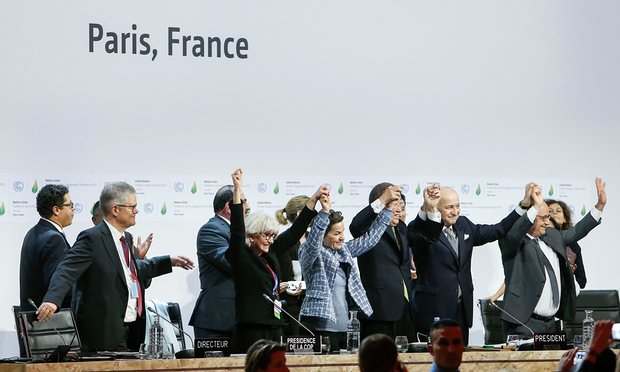
One reason is the apparent lack of urgency displayed by our leaders. U.S. Presidential nominee, Donald Trump, for example, still refuses to accept man’s part in global warming, even though recent surveys show only 15% of Americans continue to deny its existence, and while in some areas effort is being made to reduce carbon emissions the agreements reached in Paris last year are woefully inadequate, even if one optimistically assumes they will be met.
As the New York Times reported at the time:
Scientists who are closely monitoring the climate negotiations said on Friday that the emerging agreement, and the national pledges incorporated into it, are still far too weak to ensure that humanity will avoid dangerous levels of climate change.
The pledges, even if put in place in full, would result in emissions reductions perhaps half as large as those needed to meet a global goal of limiting planetary warming to 2 degrees Celsius (3.6 degrees Fahrenheit)….
…Many countries and many scientists are pushing for an even tighter target of 1.5 degrees Celsius, one that would require that fossil-fuel emissions in rich countries virtually stop by around 2030.
That tighter target is mentioned in the current draft of the agreement, but it remains unclear whether the final language would be strong enough to require that countries try to meet it, or whether it would become simply an aspirational goal.[1]
An aspirational goal? This could prove the end of civilisation as we know it; possibly the extinction of mankind. It’s hardly hoping one’s son or daughter will attain sufficient grades to make university.
Or could it be the politicians have already worked out the futility of it all and just decided to go through the motions until they have to say, “Sorry, guys, we did our best but we’re afraid you’re screwed.”
Let’s look at the facts. There were so many scientists and inventors vying for glory as inventor of the internal combustion engine it’s hard to pin down who truly was the first, but they’d probably all want to disown the device if they were alive today. Its invention (in the 18th century) may well mark the beginning of the end for human life on Earth.
At the same time as those intrepid inventors were working to perfect their ideas of internal combustion using fossil fuels, the evolution of electric power was also vying for a place in the new vehicle market. Investment and entrepreneurship won out over the electric model and thus the fossil fuel engine became the power of choice. There are now 1.2 billion cars, light, medium and heavy duty trucks and buses on the world’s roads, all pumping out greenhouse gases and other noxious substances.
According to the Union of Concerned Scientists (U.S.):
In total, the US transportation sector—which includes cars, trucks, planes, trains, ships, and freight—produces nearly thirty percent of all US global warming emissions, more than almost any other sector.[2]
How different would the world now be had the electric vehicle triumphed over the internal combustion engine?
To convert all coal or gas-fired power stations to a form of non-greenhouse-gas-emitting fuel, even nuclear, would take decades and cost more than any government is prepared to invest. Even if it were achieved, converting 1.2 billion vehicles to non-CO2-emitting power units would be prohibitively expensive, assuming such technologically-advanced engines existed in any quantity, which they don’t.
In the 1950’s and 1960’s it was considered quite acceptable for factory chimneys to belch forth vast columns of smoke and soot, until scientists realised that not only were the soot particles responsible for smog, but also the sulphur dioxide emitted from burning raw coal. Clean air laws helped to remedy the smog problem, and smokeless fuels lessened the sulphur dioxide, but invisible (and apparently harmless) CO2 gases continued to be released into the atmosphere, and in many places still are today.
The coal, oil and gas industries have successfully hog-tied the U.S. Congress in the past and will continue to do so as long as they can spread lies about the causes of climate change and still cast doubt with sufficient people to prevent a major public outcry over their irresponsibilities.
Governments are not simply allowing more and more oil drilling, fracking, and mining, but are actively supporting them. The decline of Arctic sea ice is viewed as a further source of profit-making, rather than a symptom of the poisoning of the planet.
In the U.K. plans are in the pipeline for five more open-cast coal mines which, if passed, will produce 11 million tons of coal. As the Guardian reported in June of this year:
There are a number of proposals in the planning pipeline for opencast coal mines in England and Wales, totalling 11Mt:
Nant Llesg, South Wales: 6Mt
Highthorn, Northumberland: 3Mt
Tower Colliery, South Wales: 1.2Mt
Dewley Hill, Newcastle: 800,000t
Hilltop, Derbyshire: 200,000t[3]
NOTE: Since the Guardian published this article the three million ton mine at Highthorn, Northumberland, has been given the go-ahead.
It would seem that Western governments are paying lip service to their commitments at Paris, while continuing to support the very industries responsible for the problem.
India, the fastest developing nation, is making efforts to control CO2 emissions, and China has already gone some way down the road towards limiting greenhouse gases. If the science proves correct it’ll not be sufficient to prevent escalating global warming, given the rapidity of ice melt at the Poles, the consequential rise in sea level, and the additional increase in warming created by loss of heat reflectivity due to polar ice melt.
Global warming is accelerating faster than any of the science predicted. In Paris it was agreed to cut emissions sufficiently by 2050 to keep temperature rise to 1.5 degrees Celsius. Already scientists are predicting it’ll be too little too late. The latest research supports that. An Australian study reveals that climate change began around 1830, that’s a good fifty years before previous estimates. At that time there were barely one billion humans on the planet:
Climate Council professor Will Steffen said the research was a dire warning to today’s ever-increasing population. “In the first half of the 1800s, the human population was much smaller, homes did not have electricity and coal-fired power generation was in its infancy,” Steffen said. “And yet this study finds that Earth’s climate was still responding to the small increase in carbon emissions at the start of the Industrial Age…This study demonstrates that human influence on the climate system can be traced back to centuries ago, but that those 19th century changes were small and slow compared to the massive, planet-wide changes in climate we are experiencing today.”[4]
Maybe those self-congratulatory celebrations by politicians in Paris came just fifty years too late?
To lay all the blame on politicians is really to pass the buck. Few of us can give up our cars to save the planet. Americans would likely burn the White House down at any law taking away their gas-guzzlers. The writer still has his vehicle, and so most likely does the reader. We want global warming dealt with, but we’ve become too reliant on fossil fuels to be able to make the change sufficiently quickly.
The simple truth is we have proceeded along the wrong path for too long. Technology and our profit-driven societies have blinded us to the damage we have done, and are still doing, to our fragile planet.
Man’s total failure to consider the long term effects of his pollution on the Earth have created the problems we face today. We’ve treated the planet as an unruly teenager treats his bedroom: trash everywhere, and the expectation that someone else will clean it up.
Climate changes, the devastation and suffering they are already causing, and the vastly greater suffering still to come, are, to coin a truth made infamous by the Reverend Jeremiah Wright after 9/11, man’s chickens coming home to roost.
[1] “The Road to a Paris Climate Deal” NYT, December 11th 2015 *NOTE: This link has now been deleted but the article is still available. Scroll down the page to, “Scientists see catastrophe in Latest Draft of Climate Deal”, together with an image of people holding a banner reading “Adieu”.